
Reading Contact Lenses: A Clear Solution for Near Vision
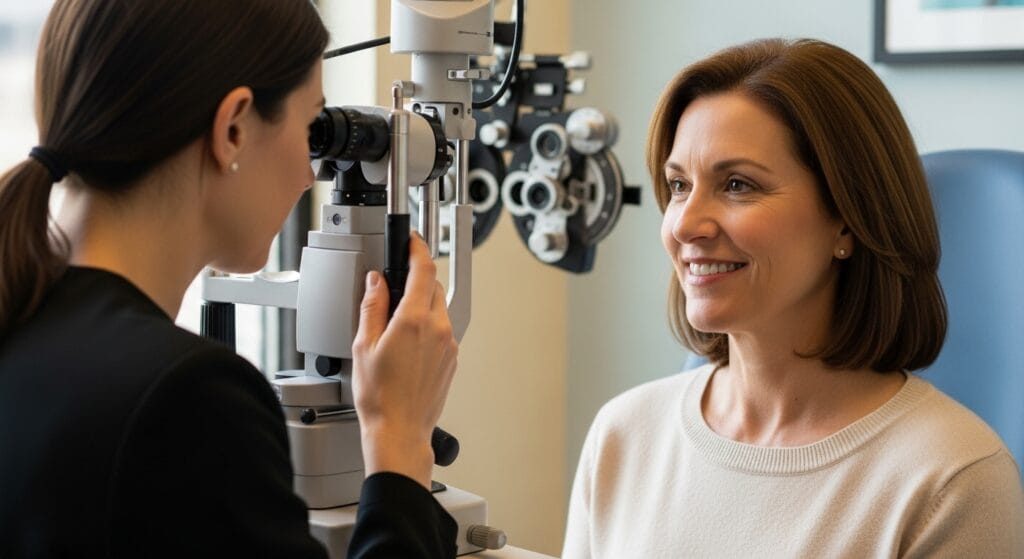
If fine print or phone screens are getting harder to read, you’re not alone. Presbyopia is a normal, age-related change that makes near tasks more difficult, especially over age 40. Reading contact lenses can deliver comfortable near vision and distance clarity in one solution.
Stop juggling readers and squinting at your phone
Discover a contact lens option that brings near and distance into crisp focus with one simple daily habit.
What Are Reading Contact Lenses?
Reading contact lenses are designed for presbyopia and place near and distance correction directly on the eye. At Koby Karp Doctors Eye Institute, options include bifocal/multifocal soft lenses and monovision—one eye for distance, the other for near. Many designs are available in soft or rigid gas-permeable (RGP) materials, with replacement schedules from daily to monthly depending on brand.
Why this matters: Multifocals and monovision reduce reliance on readers by providing usable focus at multiple distances. The AAO recognizes both multifocal contacts and monovision as standard presbyopia strategies.
How Reading Contact Lenses Work
Multifocal (simultaneous-vision) optics
Soft multifocal lenses place distance and near powers in the same lens—often via aspheric or concentric ring designs—with variants that are center-near or center-distance to match visual priorities. These designs let your visual system access multiple focal zones and select the clearest image for the task.
Monovision
One eye is corrected for distance, the other for near. The AAO notes you need to adapt to monovision, and some people may notice reduced ability to judge distance or speed (i.e., depth perception), which is why it’s smart to test your typical tasks during the trial.
Modified monovision
Clinicians sometimes pair a multifocal in one eye with a single-vision or adjust center-near/center-distance between eyes to fine-tune balance. This is a common, published fitting approach.
Multifocal & Bifocal Designs (What’s Inside the Lens)
- Soft multifocals: Aspheric/concentric designs; available in center-near or center-distance variants. Some brands support pupil-size-aware fitting and graded add powers for near.
- RGP multifocals (aspheric): Deliver crisp optics; often favored for higher prescriptions or demanding visual needs.
- Segmented (translating) RGP bifocals: Function like lined bifocal glasses—with distinct distance and near segments that translate on gaze changes. Useful for specific visual demands.
Love the idea of readers off your face, not on your forehead?
Try a same day multifocal or monovision trial and see the difference before you commit.
Types of Reading Contact Lenses Available
You have several pathways to clear near vision. The right choice depends on comfort preferences, visual priorities, eye health, and budget. Many people arrive at an excellent result after a short trial of one or two designs.
- Multifocal soft lenses deliver comfort and convenience, including daily disposables for low maintenance wear.
- Rigid gas permeable multifocals offer crisp optics for demanding tasks, especially for higher astigmatism or specific prescriptions.
- Monovision uses standard lenses, including toric options for astigmatism, and can be cost effective.
- Replacement schedules range from daily to monthly. Night wear is available on select models but is not recommended for most presbyopic eyes.
Options at a Glance
The table below summarizes how the main choices compare so you can quickly shortlist a direction with your doctor.
| Type | Pros | Cons | Best For | Typical Replacement |
| Soft multifocal | Seamless near to distance, both eyes team up, comfortable | Slight contrast reduction in dim light, brief adaptation, higher cost than single vision | All day convenience, mixed tasks, driving plus reading | Daily, biweekly, or monthly |
| GP multifocal | Very sharp optics, customizable designs | Longer adaptation, more consistent wear needed | Precision tasks, higher prescriptions, lens veterans | Monthly to quarterly wear, nightly removal |
| Monovision | Uses standard lenses, simpler and budget friendly | Depth perception reduced, not ideal for some night activities | Value seekers, those who did not love multifocals | Daily, biweekly, or monthly |
| Daily disposable | Fresh lens each day, minimal care, great for dry eyes | Higher annual cost | Sensitive or seasonal wearers, travelers | Single use |
| Monthly or biweekly | Cost effective, less waste | Requires diligent cleaning and case hygiene | Everyday users with good habits | Replace on schedule, nightly removal |
Cost and Value Snapshot
While complete pricing appears later, it helps to know the general pattern. Multifocals usually cost more than single vision lenses because of advanced optics. Daily disposables cost more per year than monthlies, but many adults consider the comfort and hygiene benefits worth it. Insurance often contributes an allowance toward lenses and covers the fitting.
- Expect multifocal daily costs to run higher per month than monthly designs, with convenience as the trade off.
- Monovision uses standard lenses, which often reduces annual spend.
- Rebates and yearly supply discounts can improve value, especially when combined with insurance or HSA funds.
Get clarity at every distance without changing glasses.
A short consult reveals which design fits your eyes and lifestyle, then you test it in the real world.
Who Is a Good Candidate for Reading Contacts?
- Adults over 40 with age-related near blur, with or without distance correction.
- Current or former contact lens wearers who want fewer interruptions for near tasks.
- Patients with astigmatism (toric or multifocal-toric choices may apply).
- Individuals open to a brief adaptation period to optimize clarity.
Your candidacy is confirmed during a comprehensive exam and contact lens evaluation.
Comparing Reading Contacts vs. Glasses vs. LASIK
Choosing how to correct presbyopia comes down to lifestyle, clarity preferences, budget, and comfort with medical procedures. Each option can work well when matched to your goals. Use this section to set expectations before your fitting so you can test what matters most during your trial.
Glasses
Reliable optics, simple maintenance, and easy task-switching with different pairs (e.g., progressives). Frames can feel limiting for sports or rain.
Reading Contacts
Place correction on the eye for a wider field of view without frames. Expect a learning curve with multifocals or monovision; adjustments are common during the first follow-up.
Surgery (context for presbyopia)
Your surgeon may discuss lens-based options when appropriate (e.g., cataract surgery with multifocal or astigmatism-correcting IOLs) that can reduce spectacle dependence in the right candidates.
Not sure which route fits you? Trying multifocal or monovision contacts first is a practical way to preview how your brain feels about shared focusing duties.
Curious whether contacts or LASIK will feel better?
Test drive monovision or multifocal contacts now so any future surgical choice is informed by your real world experience.
Comparing Reading Contacts vs. Glasses vs. LASIK
At Your Visit
Prescription refinement, contact lens selection, and in-office trial application so fit, centration, comfort, and early vision can be checked before you go—then fine-tuned at follow-up. (State law requires an appropriate fitting with follow-up before a prescription is released.)
Adaptation
Most people improve over the first days to couple of weeks as the brain learns to use the new optics; the AAO emphasizes the need to adapt—especially for monovision, where some depth-judgment changes can occur. Bring feedback on night driving, spreadsheets, or small print to your follow-up so power/dominance/design can be tweaked.
Care, Safety & Wear Time (Must-Know Essentials)
- Follow the replacement schedule exactly (daily, biweekly, monthly). Do not “stretch” days.
- Overnight wear increases infection risk; extended-wear brands exist, but risk is higher and requires careful counseling.
- Keep water away from lenses and cases—no showering or swimming in contacts; water increases infection risk (e.g., Acanthamoeba).
- Hygiene matters: wash/dry hands before handling, use fresh solution, and replace cases regularly. (FDA/CDC guidance.)
Insurance, Benefits & Ordering
Vision plans often cover routine eye exams and contact lenses; many give a discount toward contact lens fitting fees. The clinic also offers online lens ordering for existing prescriptions. Ask the team to check your specific benefits.
Want the convenience of dailies with fewer dry eye days
Ask about daily multifocal trials to see if comfort and clarity justify the upgrade for your routine.
Are Reading Contacts Right for You?
If you want fewer interruptions, wider fields of view, and freedom to move through your day without swapping glasses, reading contacts are a strong candidate. Choose multifocal for teamwork between both eyes across distances; try monovision if you value simpler optics and accept the depth-tradeoff. Keep a current pair of glasses for niche tasks, and revisit powers yearly as your needs evolve.
Ready to compare options on your eyes?
FAQs
How long does it take to adapt to multifocal or monovision contacts?
Most people feel significantly better within the first week. By the end of week two, your brain usually blends images smoothly at near, intermediate, and distance. If you still struggle after two weeks, your doctor can adjust add power, dominance, or lens brand.
Will I still need glasses sometimes?
Possibly for niche situations. Many patients achieve comfortable all day vision and keep a light pair of readers for very small print in dim light or a distance pair for rare long night drives. Your fitting will aim to minimize these exceptions.
Can I get reading contacts if I have astigmatism?
Yes. Toric multifocal lenses and toric single vision lenses for monovision are widely available. Your exam will confirm the right axis, cylinder, and fit.
Are daily disposables worth the cost?
For many adults the answer is yes. Fresh lenses each day reduce deposits and can improve comfort if you notice late day dryness. The convenience often offsets higher annual cost for busy schedules or travel.
Is sleeping in contacts safe?
Overnight wear increases infection risk. Only sleep in lenses if your doctor has approved a specific extended wear lens and you understand the trade offs. Most presbyopic wearers do best with day wear and nightly removal. FDA safety guidance is here.
How do insurance benefits typically apply?
Vision plans often include a contact lens fitting benefit and an annual lens allowance that you can apply toward your supply. HSAs and FSAs can be used for lenses and solutions.
What if multifocals do not feel crisp enough?
Your doctor can modify dominance, adjust add power, switch designs, or try modified monovision. Small changes often create a big improvement. A short second trial is common and expected.
Can seniors in their seventies wear reading contacts?
Yes, if the ocular surface is healthy and handling is comfortable. Many seniors enjoy the convenience of daily disposables to simplify care.
Do reading contacts work for heavy computer users?
Yes. Your fitting can emphasize intermediate vision for screens. Share your typical viewing distances so your doctor can optimize the balance.
When should I return for follow up?
Plan a visit one to two weeks after your first trial. Return sooner for persistent redness, pain, or blur that does not resolve after removing lenses.