
If you have astigmatism and you’re heading into cataract surgery, you’re probably wondering whether the surgery will take care of both problems at once. The short answer: it can — but only if the right lens is chosen.
Standard cataract surgery replaces your cloudy lens with a new one, but it does not automatically fix astigmatism. If your surgeon doesn’t specifically plan for it, you’ll come out of surgery with a clear lens and still blurry vision from the astigmatism you had going in.
That’s where toric IOLs come in.
What Is Astigmatism and Why Does It Matter for Cataract Surgery?
Astigmatism is a shape problem. Instead of a perfectly round cornea, yours is slightly oval — more like a football than a basketball. That irregular shape scatters light as it enters your eye, causing blurry or distorted vision at all distances.
Most people with astigmatism manage it with glasses or contact lenses. But when cataract surgery is on the table, the conversation changes.
Here’s the issue: standard cataract surgery removes the cloudy lens and replaces it with a standard intraocular lens (IOL). That new lens can correct your distance vision or reading vision, but it does nothing to address the corneal irregularity causing your astigmatism. You’ll still have that same blurriness after surgery unless it’s specifically corrected.
That’s not a failure of the surgery — it’s just not what a standard IOL is designed to do. A deliberate plan is needed before you walk into the operating room.
What Is a Toric IOL?
A toric IOL is an intraocular lens designed specifically to correct astigmatism. Unlike a standard lens, which has a uniform shape, a toric IOL has different powers in different meridians of the lens to counteract the uneven curvature of your cornea.
It’s implanted during the same cataract procedure. The surgery itself looks and feels the same as any cataract surgery — the key difference is the lens chosen and how it’s positioned inside your eye.
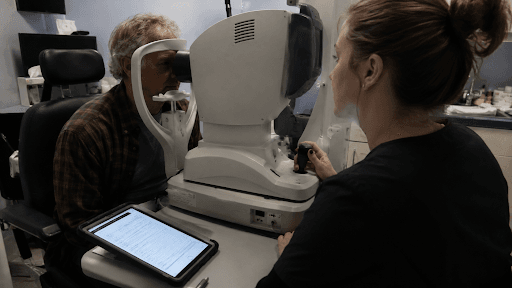
The toric IOL must be aligned precisely with the axis of your astigmatism to work correctly. Before surgery, your surgeon takes computerized measurements to determine both the power of the lens and the exact angle at which it should be placed. When done accurately, the result is that the lens and your cornea work together to produce clear vision that your previous glasses were compensating for.
At Koby Karp Doctors Eye Institute, the surgeons take detailed pre-surgical measurements for every toric IOL patient to ensure the right lens power and orientation for each individual eye. No two eyes are identical, and the approach reflects that.
One thing many patients don’t realize: a toric IOL can also be combined with multifocal technology. If you want both astigmatism correction and reduced dependence on reading glasses, a toric multifocal IOL may address both at once. Your surgeon will discuss whether that combination is appropriate for your eyes.
Toric IOL vs Limbal Relaxing Incisions
During your consultation, you may hear two different options mentioned for astigmatism correction: a toric IOL and something called Limbal Relaxing Incisions (LRI). Understanding the difference helps you have a more productive conversation with your surgeon.
Limbal Relaxing Incisions are small, precise cuts made at the edge of the cornea. They gently reshape the cornea to reduce its irregular curvature. LRI is generally a good option for low to moderate amounts of astigmatism.
A toric IOL is better suited for higher amounts of astigmatism. The built-in correction in the lens can address a greater degree of irregularity than incision-based techniques can manage. For patients with significant astigmatism, a toric IOL typically delivers better clarity and more consistent results.
At Koby Karp, Drs. Karp and Hoffman assess the degree of each patient’s astigmatism and make a specific recommendation based on the measurements. Some patients may benefit from LRI, some from a toric IOL, and some from a combination approach. The right answer depends on your individual eye.
Does Medicare Cover Toric IOLs?
This is one of the most common questions patients ask, and the answer has a few moving parts.
Medicare Part B covers the medically necessary components of cataract surgery: the surgical procedure, a standard monofocal IOL, anesthesia, and facility fees. For specifics on how your coverage applies, review our insurance information page. What Medicare does not cover is the premium upgrade to a toric IOL.
The Centers for Medicare and Medicaid Services treats the extra cost of a toric IOL as a lifestyle or vision enhancement — something beyond the basic restoration of sight. That added cost is the patient’s responsibility.
The good news is that the rules changed in recent years. In the past, Medicare patients were not allowed to pay the difference for a premium lens even if they wanted to. That restriction no longer applies. Medicare beneficiaries can now choose a toric IOL and pay the upgrade cost themselves.
For most patients, that out-of-pocket cost for the toric upgrade runs somewhere between $1,000 and $3,000 per eye above what Medicare covers. The final number depends on the specific lens selected, your individual measurements, and your geographic location. A consultation at Koby Karp will give you a precise estimate for your situation.
To make that upgrade cost manageable, Koby Karp Doctors Eye Institute offers CareCredit financing, giving patients the option to spread payments over time rather than paying the full amount upfront.
What to Expect from Toric IOL Surgery
If you’re picturing a more complicated or risky surgery because of the toric lens, you can set that concern aside. Toric IOL surgery is cataract surgery — the basic steps are the same.
Your surgeon makes a small incision, breaks up the cloudy lens with ultrasonic energy, removes it, and implants the new lens. This is the same process used in laser-assisted cataract surgery — efficient, outpatient, and done under local anesthesia. Most patients go home the same day.
The one added detail with a toric IOL is precision in placement. The lens must be oriented at a specific angle inside the eye to properly align with your corneal irregularity. Your pre-surgical measurements tell the surgeon exactly where to position it. In the days after surgery, your eye naturally settles, and any minor rotation of the lens is accounted for in this planning.
Recovery looks much like standard cataract recovery. You’ll likely notice improved clarity within a day or two, and full healing typically takes a few weeks. At Koby Karp, follow-up care for one full year is included in your surgery package at no additional cost — so your surgeon can monitor your results and make sure everything is settling as expected.
Will You Still Need Glasses After Toric IOL Surgery?
Here’s the honest answer: a toric IOL corrects astigmatism. It does not automatically eliminate the need for glasses for all distances.
Here’s what that means in practice. A standard toric IOL corrects the astigmatism component of your vision. Most are also set for distance vision. If you also want to see clearly up close without reading glasses, a toric IOL alone won’t accomplish that — you would need a toric multifocal IOL for that outcome.
For many patients with astigmatism, a toric IOL significantly reduces their glasses prescription. People who previously wore glasses full-time often find they only need them for specific tasks, or not at all for most daily activities. The degree of improvement depends on the rest of your vision profile.
A comprehensive eye exam and thorough pre-surgical consultation will set clear, realistic expectations based on your specific measurements and vision goals. If you’re hoping to be completely glasses-free, that conversation will help determine which lens combination is actually going to get you there.
Why Choose Koby Karp Doctors Eye Institute for Cataract Surgery
Choosing the right surgeon matters just as much as choosing the right lens. At Koby Karp Doctors Eye Institute, patients in the Louisville area have had access to experienced cataract surgeons for 50 years.
Drs. Karp and Hoffman bring extensive experience with premium IOL procedures, including toric IOLs for astigmatism correction. Every recommendation starts with detailed computerized measurements of each eye — because the toric IOL only works as well as the planning behind it.
When you have cataract surgery at Koby Karp, you get:
- Experienced surgeons with a long track record in premium IOL placements
- Detailed pre-surgical measurements to determine the right lens power and alignment for your astigmatism
- One full year of follow-up care included in your surgery package at no extra cost
- CareCredit financing to help manage the out-of-pocket cost of a toric IOL upgrade
- Same-day consultations available for new patients
- Convenient location at 4004 Dupont Circle, Louisville, KY 40207
If you have astigmatism and are heading toward cataract surgery, the best decision you can make right now is to have a consultation where your options are explained clearly, based on your specific eyes.
Frequently Asked Questions
What is a toric IOL and how does it correct astigmatism?
A toric IOL is a premium intraocular lens with a built-in prescription for astigmatism. It corrects the uneven corneal curvature that causes blurry vision by distributing light correctly across the retina. It is implanted during your cataract surgery in place of a standard lens.
Can a toric IOL fix both my cataracts and my astigmatism at the same time?
Yes. A toric IOL is implanted during your cataract procedure — one surgery addresses both the cataract and the astigmatism. No second procedure is needed for the astigmatism correction.
Is a toric IOL covered by Medicare or insurance?
Medicare covers the base cataract surgery and a standard IOL. The upgrade to a toric IOL is paid out of pocket by the patient. CareCredit financing is available at Koby Karp to help manage that cost.
What’s the difference between a toric IOL and a toric multifocal IOL?
A standard toric IOL corrects astigmatism and typically sets your vision for one distance (usually distance). A toric multifocal IOL corrects astigmatism and also provides multiple focal points, reducing or eliminating the need for reading glasses. Not every patient is a candidate for a multifocal lens, so a consultation is needed to determine the right option.
How do I know if I have enough astigmatism to need a toric IOL?
Your surgeon will measure your astigmatism precisely before surgery. Low to moderate astigmatism may be addressed with Limbal Relaxing Incisions. Higher degrees of astigmatism are generally better managed with a toric IOL. The exact threshold depends on your individual measurements.
Schedule Your Consultation
If you have astigmatism and you’re considering cataract surgery, you don’t have to settle for a standard lens and a new glasses prescription afterward.
Schedule your consultation at Koby Karp Doctors Eye Institute by calling (502) 897-1604 or (800) 777-4393, or reach out through our online contact form. We’re accepting new patients and can often see you the same day.
Your eyes deserve more than a one-size solution.