
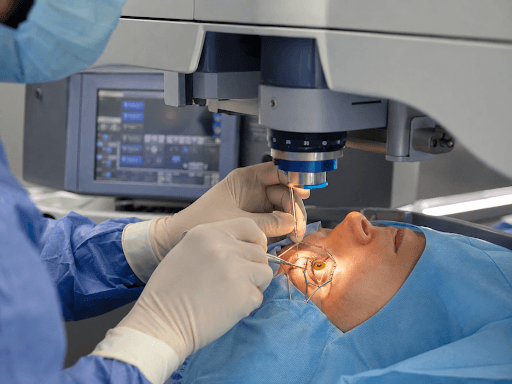
A good LASIK candidate is generally an adult with stable vision, healthy eyes, sufficient corneal tissue, and no medical or eye condition that could make treatment or healing less predictable. Your prescription also needs to fall within a range that can be safely treated with the technology your surgeon uses.
Still, checking a few boxes online cannot confirm eligibility. LASIK changes the shape of the cornea, so candidacy depends on detailed measurements of your eyes, your health history, and your individual vision goals. The National Eye Institute recommends a comprehensive eye examination to determine whether LASIK is appropriate for you.
What Factors Determine Whether Someone Is a LASIK Candidate?
Several factors work together to determine whether someone is a good LASIK candidate. Age matters, but healthy and stable eyes matter more.
The FDA notes that no lasers are approved for LASIK in people younger than 18. It also identifies refractive instability, meaning a prescription that has recently changed, as an important concern. Your surgeon will therefore review whether your glasses or contact lens prescription has remained reasonably stable over time.
Corneal health is another major consideration. Because LASIK reshapes the cornea, your cornea must have an appropriate shape, thickness, and overall condition for the procedure. Your eye doctor will also consider whether your level of nearsightedness, farsightedness, or astigmatism can be treated safely.
General health matters too. Conditions or medications that interfere with normal healing may affect whether surgery is advisable. And expectations count. LASIK can reduce dependence on glasses or contact lenses, but it cannot guarantee perfect vision at every distance or prevent normal age-related changes.
For a broader assessment of your vision and eye health, a comprehensive eye exam can help identify issues that may need attention before refractive surgery is considered.
Which Eye and Health Conditions Can Affect LASIK Candidacy?
Certain eye or medical conditions can make LASIK less appropriate, while others may simply mean surgery needs to be postponed.
Eye-related concerns can include significant dry eye, keratoconus, unusually thin corneas, active infections or inflammation, glaucoma, cataracts, and previous eye injuries or surgery. The FDA specifically advises that patients be screened for thin corneas, dry eye, keratoconus, blepharitis, and other factors that may raise the likelihood of complications.
Dry eye deserves particular attention because LASIK can worsen existing dryness. If you already experience burning, grittiness, fluctuating vision, or irritation, your doctor may first evaluate and manage your dry eye syndrome before deciding whether refractive surgery is appropriate.
Overall health also enters the equation. Autoimmune diseases, immune deficiencies, poorly controlled diabetes, and certain medications may interfere with healing in some patients. That does not mean every person with a medical condition is automatically excluded. It means your surgeon needs the complete picture.
Patients with other concerns can also review Louisville Laser’s information about eye conditions and treatments before their evaluation.
How Do Age, Prescription Stability, and Life Stage Affect LASIK Eligibility?
Age does not determine LASIK eligibility by itself. The bigger issue is whether your eyes and prescription have reached a stable point.
Although the FDA-approved minimum age is 18, people in their late teens or early twenties may still experience prescription changes. The FDA therefore recommends discussing recent changes in glasses or contact lens prescriptions with your doctor before moving forward.
Pregnancy and breastfeeding can also temporarily affect vision because hormonal changes may cause refractive instability. Certain medications can have a similar effect. In those situations, waiting until vision stabilizes may provide a more reliable basis for treatment planning.
Later in adulthood, different considerations appear. Presbyopia gradually affects near vision, and cataracts may become relevant with age. The National Eye Institute notes that LASIK does not correct presbyopia, so patients should understand how age-related changes could affect their long-term need for reading glasses.
How Does a LASIK Consultation Determine If the Procedure Is Safe for Your Eyes?
A LASIK consultation combines eye measurements, vision testing, and your medical history to determine whether treatment can be performed with an appropriate level of safety.
Your doctor will typically review your current prescription and how it has changed over time. The examination also evaluates the health of the cornea and surrounding structures. Corneal imaging can provide a detailed map of its shape, while thickness measurements help determine whether sufficient tissue is available for treatment.
The National Eye Institute states that patients need a comprehensive dilated eye exam to determine whether LASIK is right for them. It also notes that doctors may use detailed corneal imaging before surgery.
Other parts of the evaluation may include checking for dry eye, infection, inflammation, cataracts, glaucoma, or other conditions that could affect results. Your doctor will also review medications, previous procedures, health conditions, and your expectations for life after surgery.
That is why an online checklist can only suggest whether you might qualify. A qualified Louisville eye doctor must examine your eyes before you can know for certain.
Can You Become a LASIK Candidate Later If You Do Not Qualify Now?
Sometimes. Being told you are not a LASIK candidate today does not necessarily mean you will never qualify.
Some reasons for delaying LASIK may be temporary. These can include an unstable prescription, pregnancy or breastfeeding, an active eye infection, inflammation, or dry eye that needs treatment first. Once the underlying issue has been addressed and vision is stable, your eyes may be reevaluated.
Other findings may make a different treatment more appropriate. Significant corneal abnormalities, cataracts, certain eye diseases, or anatomical limitations may lead your surgeon to recommend another approach instead.
The important question is not simply, “Can I get LASIK?” It is, “Which option is safest and most appropriate for my eyes?”
What Are Common Questions About LASIK Candidacy?
What prescription is too strong for LASIK?
There is no single prescription number that applies to every patient or laser system. FDA-approved LASIK platforms have specific treatment ranges, and your surgeon must also consider corneal thickness, shape, eye health, and how much tissue would need to be reshaped. A high prescription does not automatically provide a yes or no answer.
Can you get LASIK if you have astigmatism?
Yes, LASIK can treat many cases of astigmatism. Whether yours can be treated depends on its degree, your overall prescription, corneal characteristics, and the approved capabilities of the laser being used.
Can dry eyes disqualify you from LASIK?
Significant dry eye can affect candidacy because LASIK may temporarily worsen dryness and related visual symptoms. Your doctor may recommend treating the ocular surface first and reassessing your eyes afterward.
Can you get LASIK after age 40?
Potentially, yes. People over 40 can still qualify, but presbyopia and other age-related changes become an important part of treatment planning. LASIK does not stop the natural progression of presbyopia.
How do I know for sure if I qualify for LASIK?
A comprehensive refractive surgery evaluation is the only reliable way to confirm whether you are a LASIK candidate. Your surgeon needs to measure your eyes and assess factors that cannot be accurately evaluated through symptoms or an online questionnaire alone.
What Is the Best Next Step If You Are Considering LASIK?
General eligibility guidelines are useful for understanding what doctors look for, but every pair of eyes is different. Prescription history, corneal structure, tear quality, eye health, medications, and lifestyle can all change the recommendation.
If reducing your dependence on glasses or contact lenses is important to you, the most useful next step is a personalized evaluation. It can tell you not only whether LASIK is appropriate, but also whether another vision correction option may better suit your eyes.
Why Louisville Laser Is Your Ideal Choice for LASIK Candidacy?
At Louisville Laser, patients have access to comprehensive ophthalmic care and physicians who can evaluate more than a prescription alone. The practice provides eye examinations and diagnosis and treatment for a range of conditions that may affect vision correction decisions. That broader eye-health perspective is valuable when determining whether refractive surgery is appropriate.
Louisville Laser also includes refractive surgery expertise within its medical team. The practice identifies Madison Kerley, M.D., as a comprehensive ophthalmologist specializing in cataract and refractive surgery, including LASIK and PRK. A personalized evaluation can help you understand your options, risks, and realistic expectations before making a decision.
Find Out If LASIK Is Right for You at Louisville Laser
Ready to move beyond online checklists? Schedule an eye consultation with Louisville Laser to have your prescription, corneal health, eye health, and individual vision goals professionally evaluated. The right recommendation starts with understanding your eyes.